
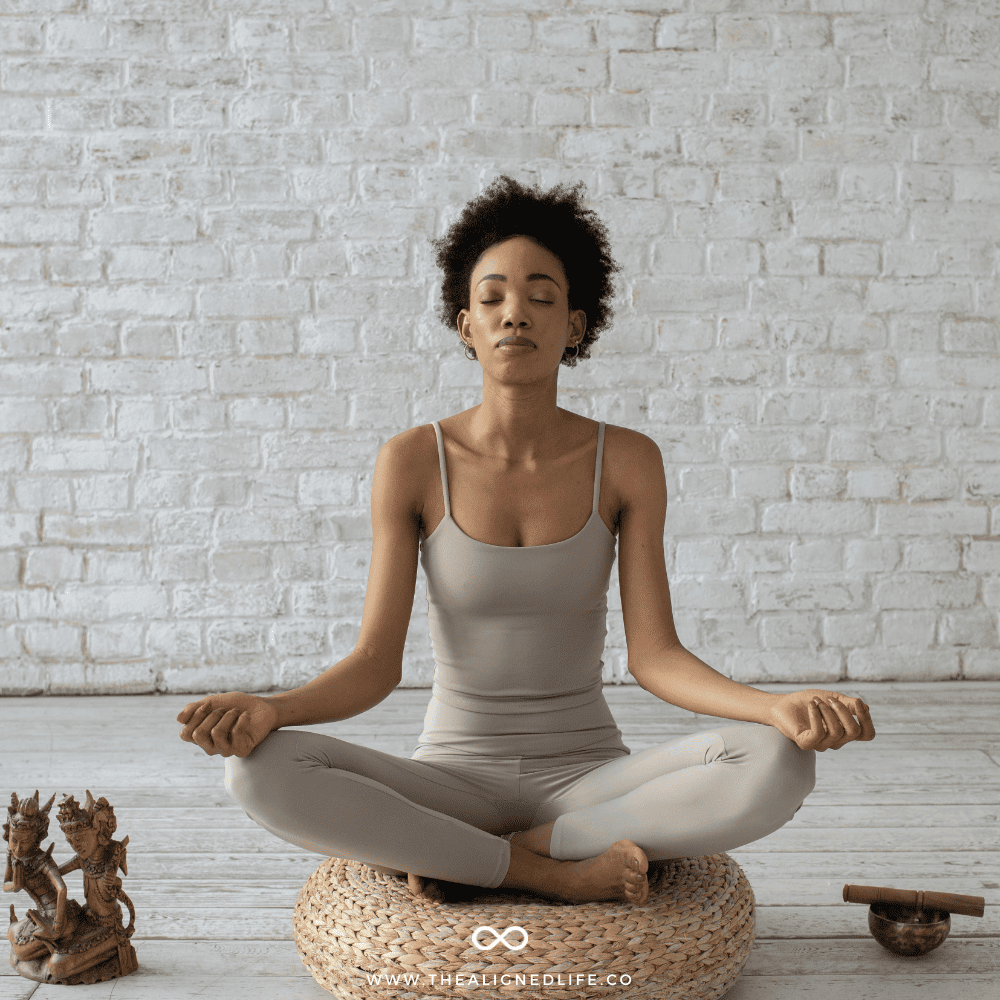
How To Practice Mindfulness | 5 Simple Mindfulness Exercises
Last Updated on October 17, 2026
Are you Mindfulness Curious? Perhaps you’ve read a bit about mindfulness and are looking for some inspiration to get you started. Or maybe you’re having a stressful time in your life and you need a simple way to start calming down.
You’re in the right place! As the author of The Mindful Witch, you might have guessed that mindfulness is a personal favorite.
Much of our unhappiness and stress happens when our mind is set on either the future (creating anxiety) or on the past (creating depression from helplessness). On a fundamental level, mindfulness brings you back to the present moment.
Mindfulness itself doesn’t solve our problems. But it allows us to feel calm in our body and have a clearer head about what we can actually control: the present moment.
It’s one of my favorite practices, and I promise it will be one of yours. There are just too many benefits for it not to help you!
So let’s get into it.
What Is Mindfulness?
Mindfulness is the ability to be fully present in the moment, and aware of our current thoughts, feelings, and surroundings. It’s a state of mind that allows us to connect with our inner selves and experience life more deeply. Think of it as a mental muscle we can strengthen through practice.
As mentioned, our brain has a tendency to obsess about things in either the future or the past. In either state, you feel a sense of powerlessness–because how can you possibly change either the future or the past?
Mindfulness brings your attention back to the only thing you can ever control in your life: how you feel in this exact moment.
What is Meditation?
Meditation is a practice that helps us cultivate mindfulness. It involves focusing our attention on a specific object, thought, or sensation. While meditation often involves sitting quietly, it can also be done through walking, eating, or other activities.
Is Meditation Mindfulness?
Not always. There are mindfulness meditations that have you concentrating on your breath or the empty space between your thoughts. There are also guided meditations, mantra meditations, and many other types of meditations that aren’t based on mindfulness.
I recommend experimenting with all types of meditation to find out what works best for you. However, if you are on a mindfulness journey it only makes sense to add mindfulness meditations or other mindfulness practices to your routine.
Is Mindfulness Meditation?
Nope! While there are mindfulness meditations, there are also other mindfulness practices that aren’t meditating at all.
If you want to get started with mindfulness meditation, I recommend doing some meditations with a teacher like Tara Brach or even some free ones on Insight Timer or YouTube.

The Benefits of Mindfulness
Okay, now you get what it is. But the real magic is what mindfulness can do for you. Unlike some other practices, mindfulness has a long list of tangible benefits for your mind and body.
Mental Health Benefits
- Reduced stress and anxiety. Mindfulness helps calm the mind and reduce stress hormones, leading to a more relaxed and peaceful state of being.
- Better focus and concentration. By training your mind to stay present, you can enhance your ability to focus on tasks and improve your attention span.
- Improved emotional regulation. Mindfulness practices can help you better understand and manage your emotions, leading to greater emotional stability.
- Boosted self-awareness. Observing your thoughts and feelings without judgment will give you valuable insights into your own patterns and behaviors.
Physical Health Benefits
- Lowered blood pressure. Regular mindfulness meditation has been shown to reduce blood pressure (a significant risk factor for heart disease).
- Improved sleep quality. Calming the mind can help you fall asleep faster and enjoy more restful sleep.
- Enhanced immune function. Studies have indicated that mindfulness practices can strengthen the immune system.
- Pain reduction. Mindfulness techniques can be effective in managing chronic pain by shifting your focus away from physical discomfort.
Other Benefits
- Boosted creativity. Feeing your mind from distractions can spark creativity and innovative thinking.
- Improved relationships. Mindfulness can help you communicate more effectively and develop deeper connections with others.
- Resilience. Cultivating a sense of calm and acceptance can help you bounce back from challenges with greater ease.
How To Practice Mindfulness | 5 Simple Exercises
Mindfulness Exercise #1: Focus On Your Breath
The most simple mindfulness exercise is to focus on your own breathing. Inhale, exhale, repeat. If you’re feeling anxious or stressed, try to lengthen your exhales and slow down your overall breath pattern.
From here, you can turn this into a mindfulness meditation. Sit comfortably somewhere, perhaps put on some calming music, set a timer and go for it. If your mind wanders, that’s okay! Just gently bring your attention back.
But it’s also one of those exercises you can do almost anytime, anywhere. (Perhaps not while you’re driving though, okay?)
Breathwork naturally calms the nervous system, turns off fight or flight and brings a feeling of safety into the body. So this is an excellent tool you can turn too if you’re having an off moment at work or you just need to quiet down your mind for a few minutes. Even just three breaths can work wonders!
Mindfulness Exercise #2: The Body Scan
A body scan lets you slow down and truly notice how you’re feeling, throughout your entire body. Even though you think you already know that, you might be surprised at how much you get out of this exercise!
Take a few minutes to tune into how your body feels right now. Again, you can do this as a meditation or in a less in-depth way while sitting at your desk at work (for example).
First, bring your attention to your breath. Notice the speed and intensity at which you’re breathing, without trying to change it.
Second, start at either your head or feet and bring awareness to each part of your body individually. Notice how it feels: tense? Buzzing? Cold or warm?
Mindfulness Exercise #3: Mindful Drinking (or Eating)
Why not work mindfulness into part of your daily routine? Creating a mindfulness practice around, say, your morning espresso, can give you much more than just a caffeine boost. This is also a great tip if you tend to overeat from stress.
To do it, take your cup in your hands. Notice how it feels: the warmth, the smoothness of the cup, etc. Notice how it starts to warm your hands up. Hold it up to your face. Smell the coffee or tea. Notice how it smells (in a real way not a rushed way). Then take your first sip. How does it feel? How does it taste?
Of course, you can also do this with eating and even with food preparation in general. How does the cutting knife feel? How do your fresh veggies feel? What does it all smell like? What does your plate look like? Smell like? Taste like? What does everything taste like together?
Mindfulness Exercise #4: Walking Meditation
A walking meditation is similar to the mindful drinking exercise above. Just go for a normal walk, but place your attention on your body and what’s around you (instead of mentally planning out your day tomorrow or replaying that conversation you had yesterday).
Notice how your feet feel and your walking pace. (I recommend going a bit slower than your normal walking pace but it’s up to you.) Notice how you’re breathing, and how your body feels. Notice the temperature of the day, the smell in the air. Look around you: notice the trees, the cracks in the sidewalk, hear the birds calling.
You can also practice this in the privacy of your home, by pacing up and down a hallway. If you want to get deep into meditation, this is a better option than going outside. Just keep taking steps, noticing your body, your breath and the room around you. Even if you’ve seen it all a zillion times, try to notice shapes, colors, and smells.
Mindfulness Exercise #5: The 5 Things
The Five Things is another practice you can take with you and do anytime you need a quick mindfulness moment. It works by bringing your attention back to your body and the current moment (not some far off time in the future or in the past).
To begin, take a moment to bring your attention to the space around you.
Identify five objects that you can see. What five things catch your eye right now? It could be a painting, a plant, a piece of furniture, or anything else within your view.
Next, identify four things you can feel. What are four things you can feel right now? This could be the texture of your clothes, the surface of a table, or the temperature of the air.
Now identify three things you can hear. What three sounds are you currently aware of? It could be the ticking of a clock, the hum of a refrigerator, or the noise of traffic outside.
Next identify two things you can smell. What two smells are present in your environment? It could be the aroma of coffee, the scent of a flower, or the smell of freshly cut grass.
Finally, notice one thing you can taste. Did you eat or drink something recently? Is there any taste lingering around?

More Mindfulness Tips
Here are a few tips to get started:
- Commit to a regular practice. Pick a mindfulness exercise you enjoy and add it to your daily or weekly routine.
- If you’re meditating, start small. Nothing will kill a meditation practice faster than trying to do an hour when you’re just beginning! You can gradually increase the length over time but even doing just five minutes can have a huge impact.
- If your mind wanders, don’t get discouraged! Just gently bring your awareness back where you want it. Don’t make it worse by letting your Inner Mean Girl loose.
- Anything can be a mindfulness practice: folding the laundry, doing the dishes, even brushing your teeth! Just bring conscious awareness to it instead of letting your mind wander.
- Stop rushing. We often rush through our everyday routine because that’s what our parents taught us to do. (And surprise! Now we have anxiety.) Incorporating a few mindfulness moments throughout your day lets you slow down and stop feeling that endless need to rush.
- Be patient. Your monkey brain is used to doing what it wants, when it wants. Practicing mindfulness might feel tough at first and that’s okay! It will get easier with time.
- If all else fails, you can always just focus on your breathing.
Mindfulness Practice | Final Thoughts
Remember, the goal of mindfulness and meditation is to cultivate a sense of peace and overall well-being. Incorporating mindfulness into your daily life can be as simple as taking a few moments to breathe deeply and focus on the present moment. Whether through meditation, yoga, or simply paying attention to your senses, the benefits of mindfulness are worth the effort you put into it. I welcome you to Team Mindful!


Love This Post? Then Save It To Pinterest!